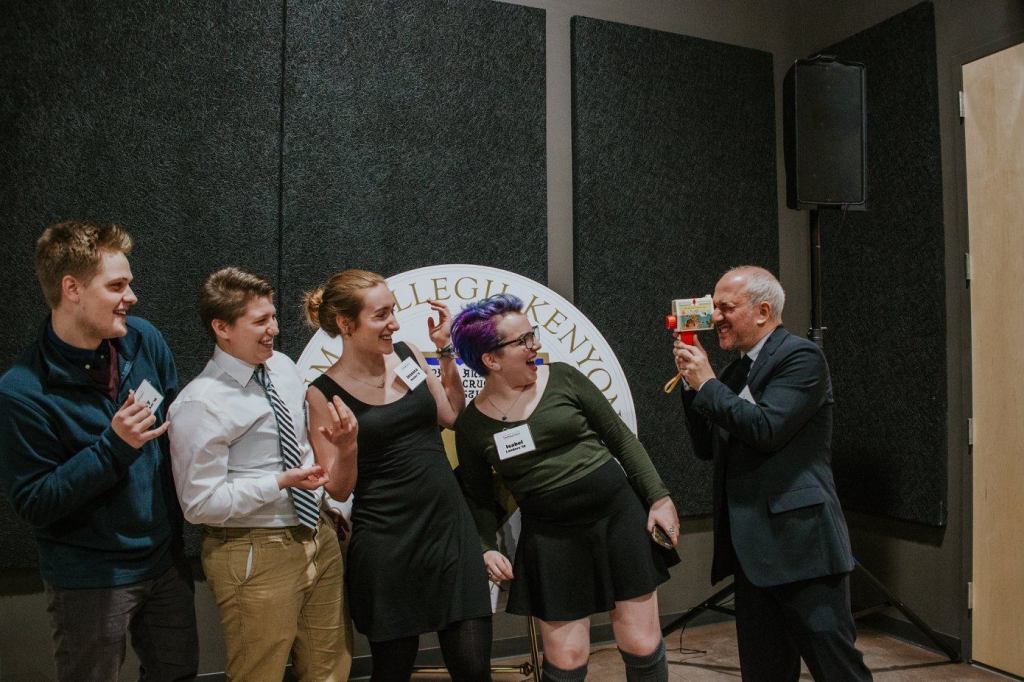
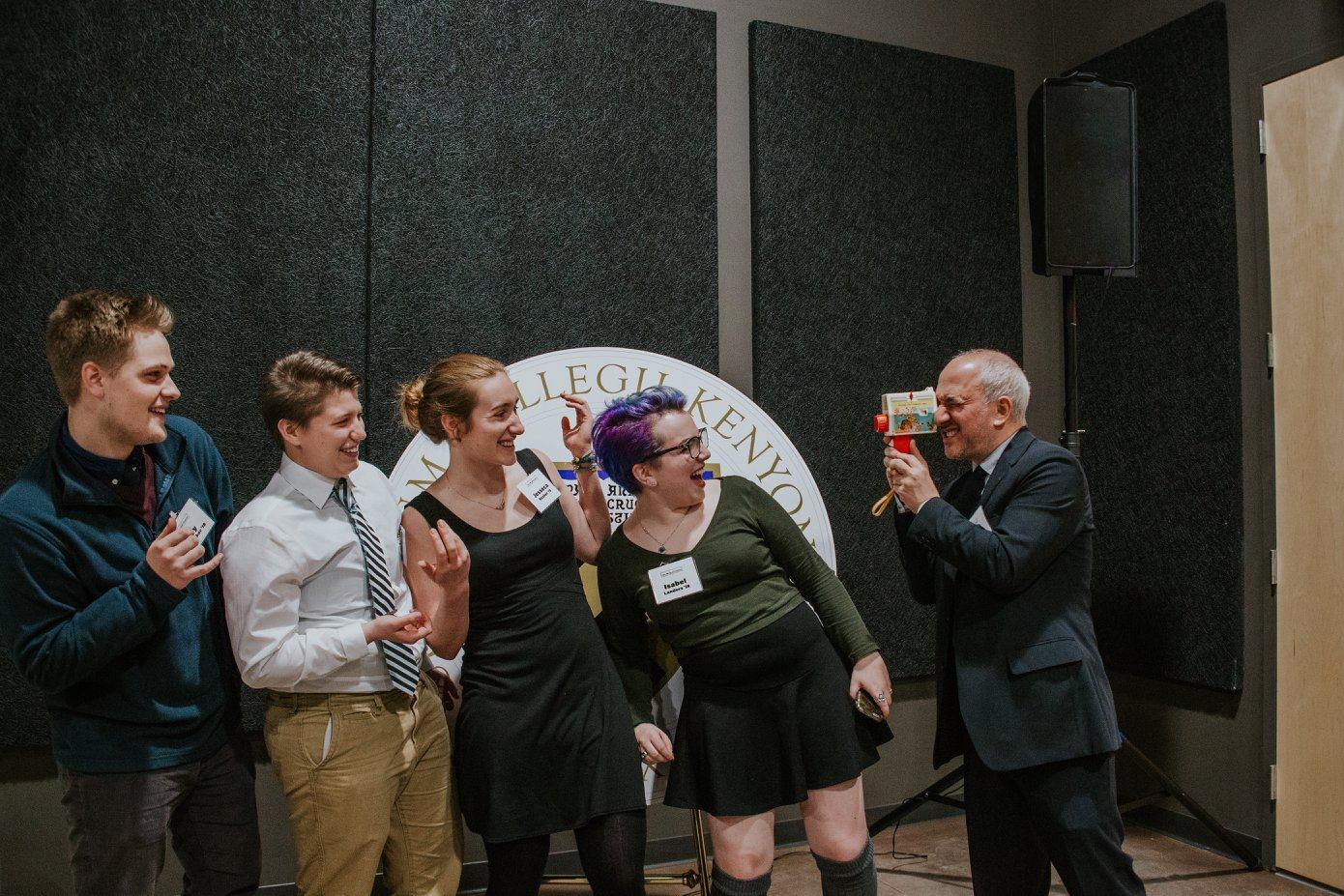
A photo of Jess and her classmates posing before Kenyon professor Jon Sherman at the opening of the Kenyon College Wright Center.
In my Montessori school, growing up, we used to have lessons on courtesy and etiquette. This practice is part of the history of the Montessori education strategy, as Dr. Maria Montessori first started her schools by teaching orphaned and homeless children off the street how to polish silverware, eat with proper etiquette skills, and eventually read and write through experiential education methods. Maria used hands-on teaching skills that emphasized learning by doing. Growing up, this hands-on kinesthetic teaching style truly catered to the way I learn best – and to this day I am very grateful for hands-on learning opportunities.
One of my favorite Montessori lessons was on table setting. It was exciting to play pretend as an adult and to learn alongside my peers. The best part of the lesson were the perfectly shaped melon balls that our teachers served us in fancy white bowls.
Now in college, I have immensely benefitted from taking advantage of the experiential learning opportunities that have been presented to me. Whether that has been conducting independent ecology research projects in the field, or working on collaborative projects with my film faculty members – I have been challenged to grow as a student and a leader.
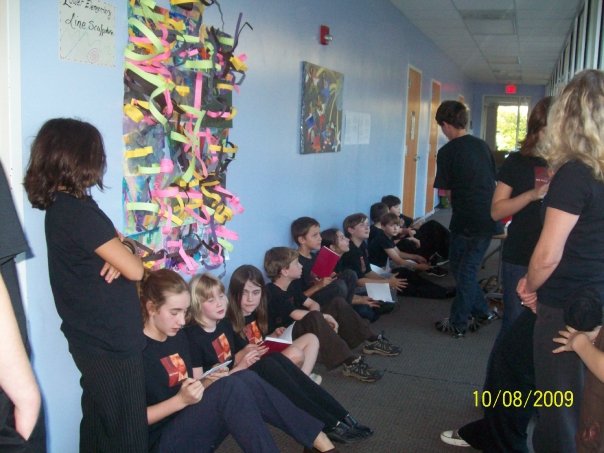
A photo of Jess and her Montessori classmates run lines before performing in A Merchant of Venice.
As a crew member on one of my professor’s feature film projects outside of Kenyon, I have learned a lot firsthand about the etiquette system on film sets themselves. In many ways, I would argue these could apply to being a student or a citizen of the world in general. I’ve compiled a list below, with some of my own caveats.
1.Be present. If there’s one problem that seems most basic and fundamental — so easy to solve — be at the set you’ve been asked to show up to. You committed to being a part of the project, so don’t wander off and take photos with the actors. Don’t go get snacks in the middle of a shot — especially if you’re supposed to be “on script.” This also means you need to mentally be present. Why physically fill the space if you’re not also going to be there, in the moment? Don’t dis-engage by getting sucked into your film. Take pride in your work, in your job, and in your position on the team.
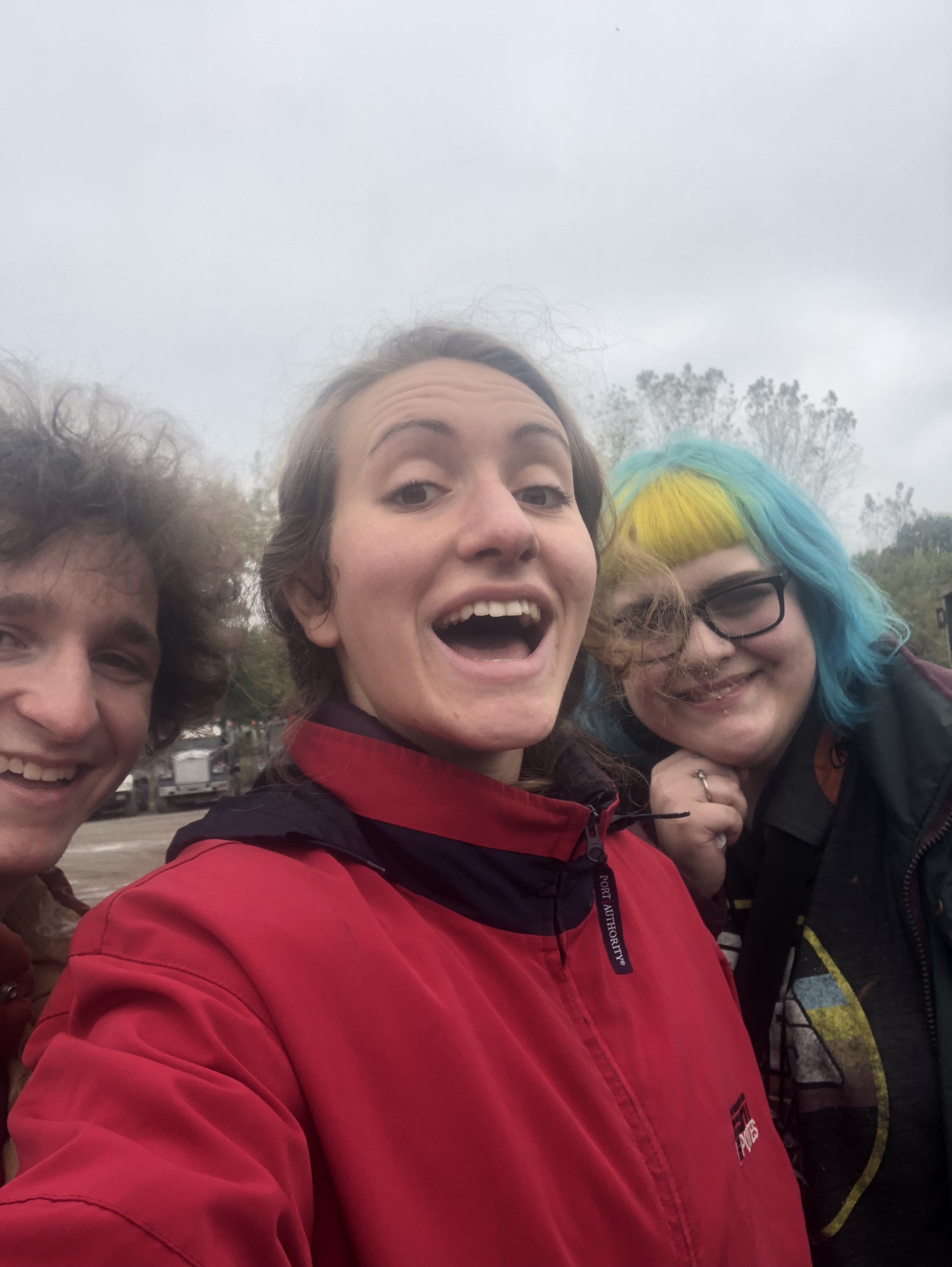
A selfie of Jess and two crew members staying positive on a very cold feature film shoot.2.Stay positive. This doesn’t mean you need to be excited about every element of your job, and it doesn’t mean you have to have a perfect day, every day. It does, however, mean that you should be courteous of your co-workers. It also means you should be open to problem solving and collaboration. Being a crew member ultimately means you are part of a team.
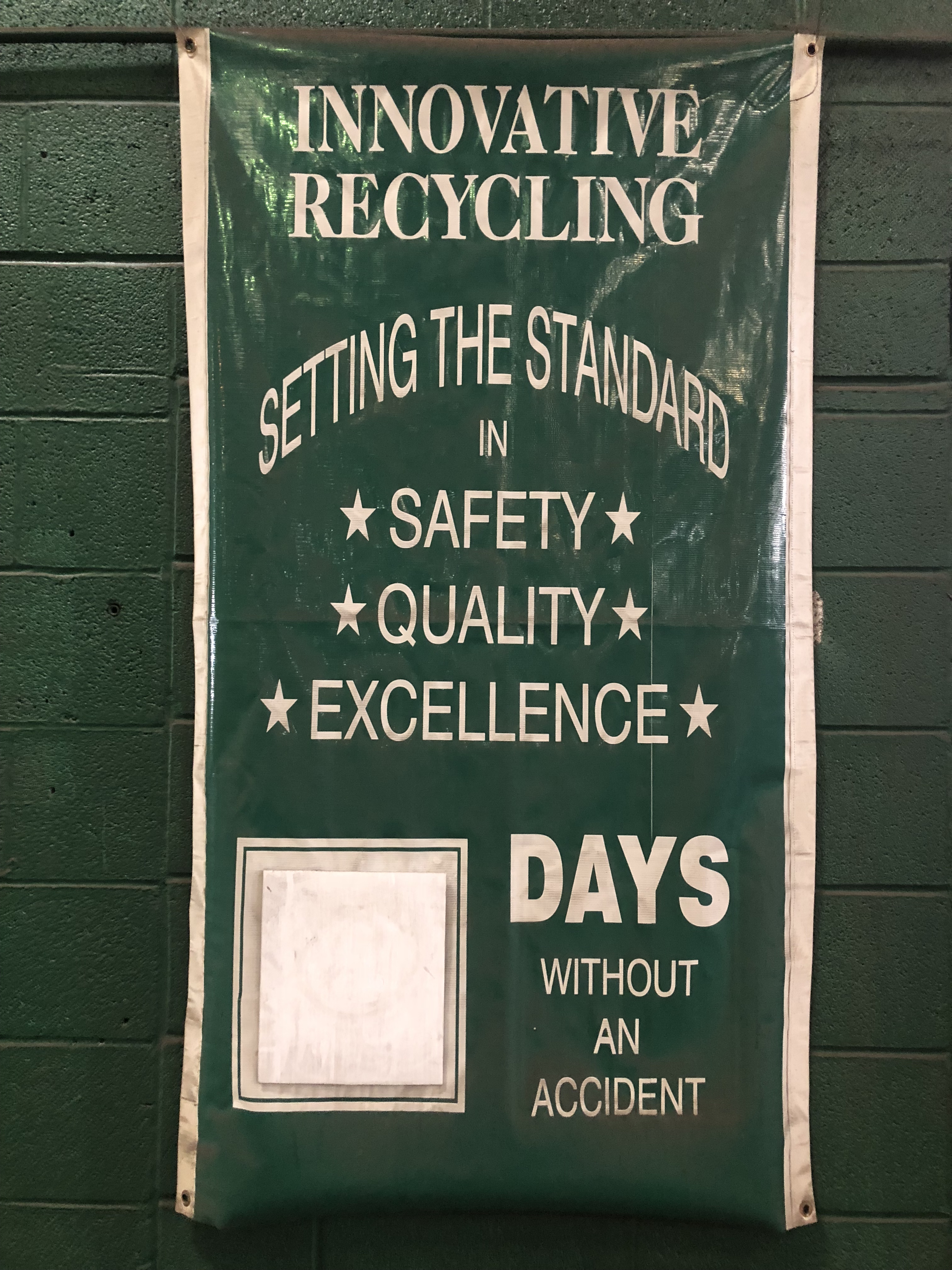
A foreboding poster Jess found on location while shooting a feature film. While not immediately mentioned here, always remember to stay safe!3.Know your role. The way I see it, you have a choice as a collaborator. You can either keep your head down and do just what you’re told, or else you can be proactive and really care about the rest of your team. Filmmaking is a collaborative art, so you are really only as strong as the weakest member of your team. As far as I can tell, this concept is opposite of the industry attitude. It’s inherently super cynical to say things like, “It’s not my cow,” and to watch other people on set struggle to get their job done – but it seems to be fairly standard. Sure, if they’re incompetent you shouldn’t do their job for them, but I really believe in the power of genuine kindness. Pay it forward, and help make the set a place of professionalism and a place people want to be. Your crew will be more loyal if you cultivate a sense of belonging and empowerment. Maybe this doesn’t work on a super large set full of jaded senior members of the industry, but at its core filmmaking has the potential to be a significantly less toxic workspace.
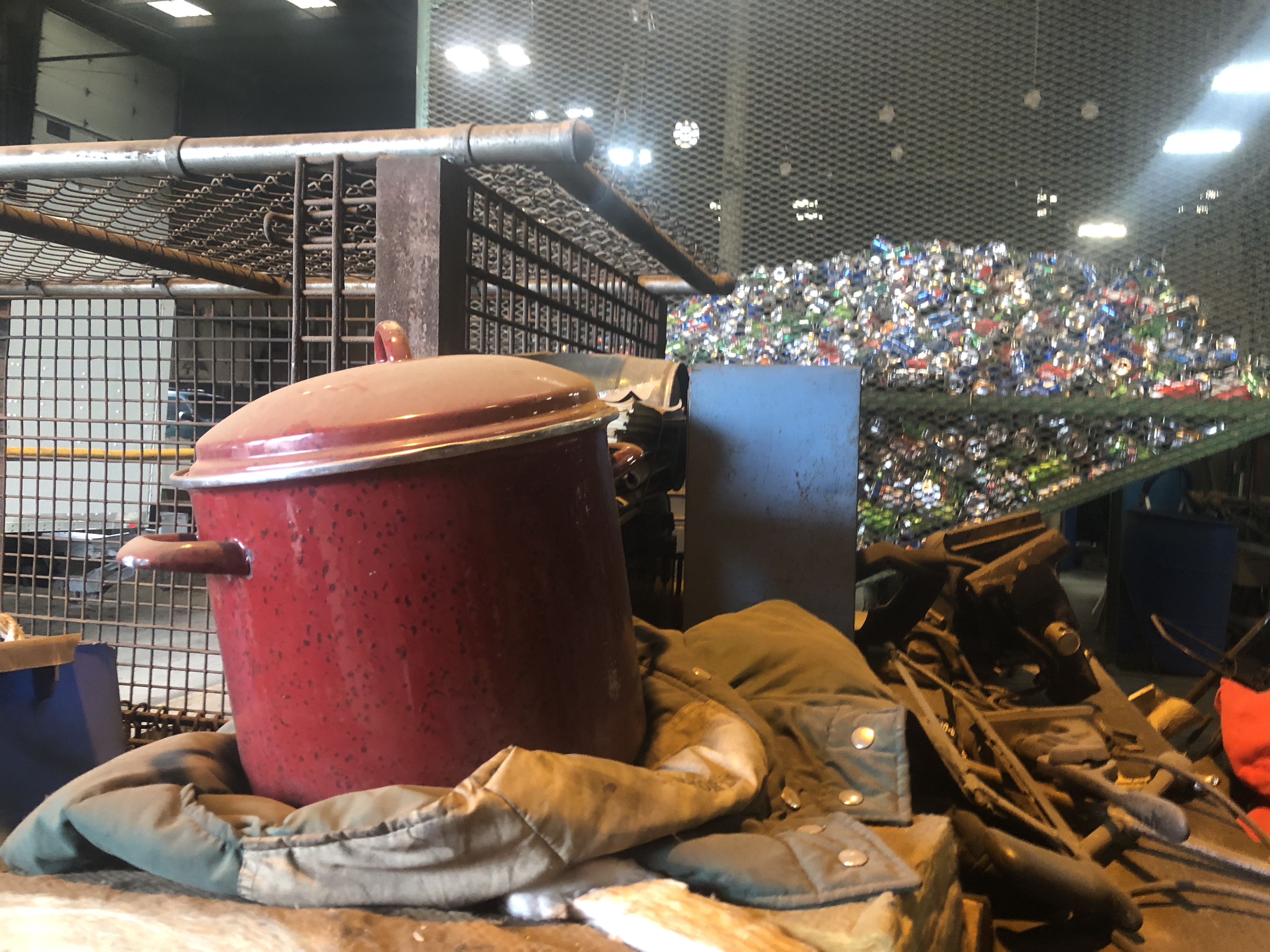
Don’t be like this worthless, forgotten, dusty pot that Jess found on set. Serve a purpose, and go above and beyond when you can. Contribute.
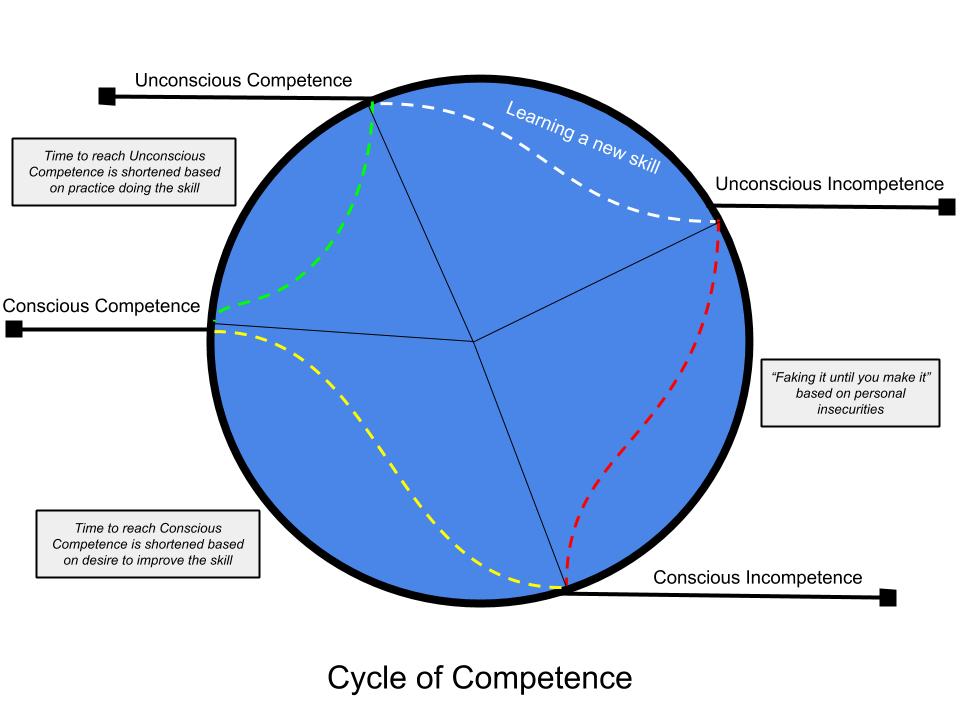
At the end of the day, I realize there’s a level of insecurity in any job environment. Because you want to be hired again, it is always in your best interest to “Fake it until you make it,” or hide your faults. While I understand the thinking behind this statement, I wish so clearly that we could be more genuine with one another. I guess the thing that comes to mind are the four stages of competence – a system I learned about through my time as an outdoor educator.
Below I have included a diagram that I made for the purpose of this blog post. I think that as it stands, many people on set naturally fall into the “Unconscious Incompetence,” to “Conscious Incompetence,” range. Based on my observations, people become genuine and nice on set — and in life — once they reach the “Conscious Competence,” to “Unconscious Competence” range. Therefore, it is my goal as a student and citizen of the world to reach that level of ability — first and foremost by caring about my collaborators and being honest about my ability levels.

 Now in college, I have immensely benefitted from taking advantage of the experiential learning opportunities that have been presented to me. Whether that has been conducting independent ecology research projects in the field, or working on collaborative projects with my film faculty members – I have been challenged to grow as a student and a leader.
 Jesseca Kusher
Leave a comment